Electronics & internet: how many watts they use
TVs, computers, consoles, routers, Starlink, lights and chargers. The biggest draw here is the gaming pc at about 400 W; the smallest is the led light bulb at about 9 W.
| Computer monitor120 V | 2510–80 | — | 0.15 |
|---|---|---|---|
| Desktop computer120 V | 10040–250 | — | 0.5 |
| Game console120 V | 1607–220 | — | 0.48 |
| Gaming PC120 V | 400200–800 | — | 1.2 |
| LED light bulb120 V | 95–20 | — | 0.03 |
| Laptop120 V | 5015–200 | — | 0.3 |
| Phone charger120 V | 155–60 | — | 0.03 |
| Printer120 V | 1510–600 | — | 0.13 |
| Starlink120 V | 9025–100 | — | 2.16 |
| TV120 V | 8050–200 | — | 0.4 |
| Wi-Fi router and modem120 V | 156–35 | — | 0.36 |
Guides on this topic
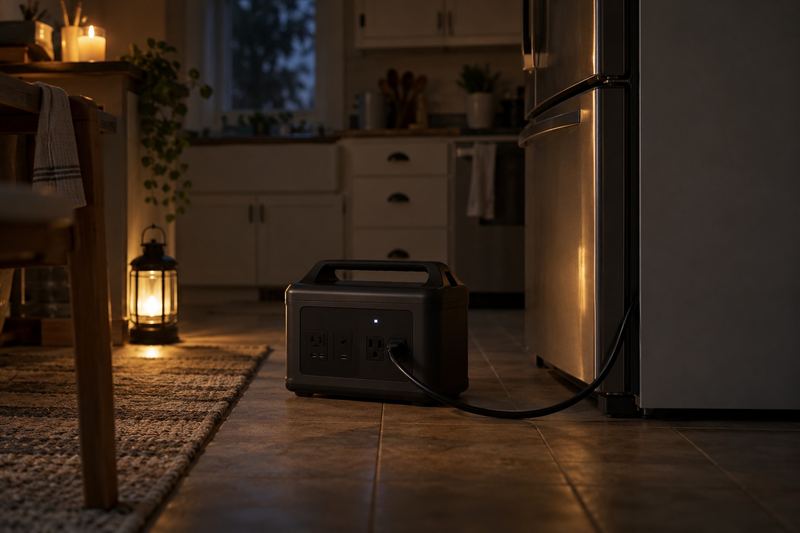
How long will a power station last? Runtime math and examples
How long a power station will run a fridge, CPAP, router or Starlink: the Wh × 0.85 ÷ watts formula, fridge duty cycle, worked examples and solar recharge.
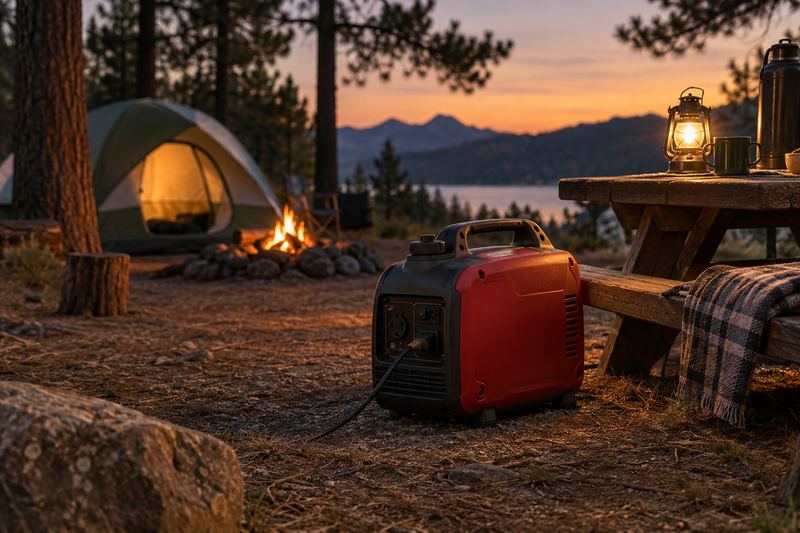
Inverter generator vs conventional generator: key differences
Inverter generators give cleaner power, sip fuel at light loads and run quieter; conventional ones cost less per watt. How THD, noise and costs compare.
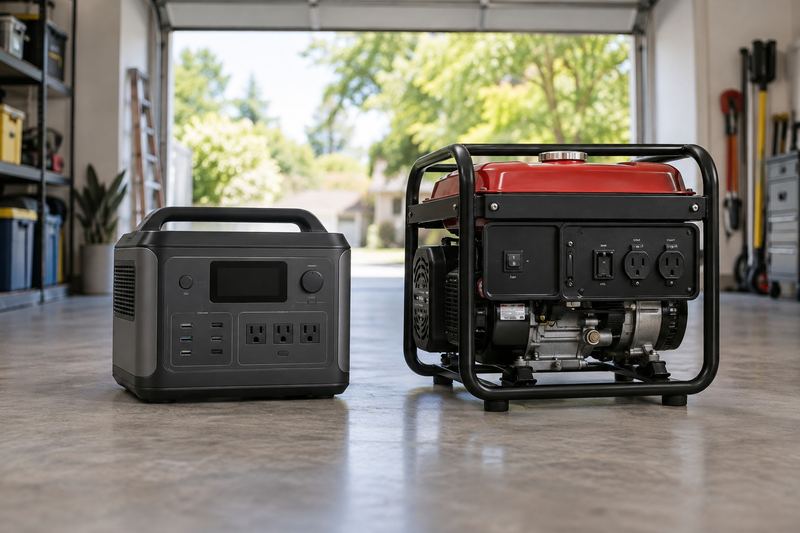
Power station vs generator: which is right for your outage?
Power station vs gas generator: capacity vs fuel, surge watts, indoor use, noise, solar recharge, battery cycle life and which fits your outage needs best.