A 30-amp RV can draw at most 3,600 W (30 A × 120 V), so a generator rated around 3,000–3,600 W covers one rooftop air conditioner plus everyday loads. A 50-amp RV has two 120 V legs of 50 A each, up to 12,000 W, and needs a much larger generator to use it fully.
Key facts
- 30-amp RV service: one 120 V feed, 30 A × 120 V = 3,600 W maximum.
- 50-amp RV service: two 120 V feeds of 50 A each, about 12,000 W in total.
- A 13,500 BTU rooftop AC runs on about 1,500–1,700 W but can surge to about 2,800–3,500 W at start without a soft starter.
- Cummins calls 2,500–2,800 W a common minimum for 30-amp RVs with air conditioning, and 3,600 W a match for 30-amp shore power.
- Generator outlets made for RVs are the TT-30R (30 A) and 14-50R (50 A).
What size generator do I need for a 30-amp RV?
The 30-amp hookup caps what your RV can draw: 30 amps at 120 volts is 3,600 watts, and the RV's main breaker trips above that. A generator in the 3,000–3,600 W range (rated, not just peak) can therefore supply almost everything a 30-amp rig can use. Cummins, which makes RV generators, says a 3,600 W generator gives you the same power as 30-amp shore power and that 2,500–2,800 W is often a workable minimum for 30-amp RVs with an air conditioner.
Which end of that range you need depends on the rooftop AC and what else runs with it:
- AC plus small loads (lights, fans, TV, phone and laptop charging, the converter keeping batteries topped up): a generator whose maximum output covers the AC's start surge, about 3,000 W for a 13,500 BTU unit without a soft starter.
- AC plus a microwave or coffee maker at the same time: about 3,100 W of running load, which is close to the 3,600 W ceiling of the hookup itself. You need a generator that can sustain that, or you take turns.
Worked example: 30-amp travel trailer
| Item | Running watts | Starting watts |
|---|---|---|
| Rooftop AC (13,500 BTU) | 1,600 | 3,000 |
| TV | 80 | none |
| 6 LED lights | 54 | none |
| Laptop | 50 | none |
| Total | 1,784 | largest: 3,000 |
Using our standard method (all running watts plus the largest starting load), the peak is about 4,800 W. That is a cautious figure, because the AC's 3,000 W starting number already includes its own running draw. In practice, Micro-Air, a soft-starter maker, says a 13,500 BTU unit needs at least a 3,000 W generator without a soft starter, and a 15,000 BTU unit at least 4,000 W. Our generator size calculator will run the numbers for your own list.
Turn on the microwave (about 1,500 W) while the AC runs and the running load climbs to about 3,300 W, near both the hookup limit and the rated output of a 3,000 W-class generator. Switch the AC off while you cook, or step up in size.
What size generator do I need for a 50-amp RV?
A 50-amp RV plugs into a 14-50 receptacle that carries two separate 120 V legs, each able to supply 50 A. That is 6,000 W per leg and about 12,000 W in all. Cummins says a 12,000–12,500 W generator is the top end for a 50-amp RV and puts a Class A coach with three 15,000 BTU air conditioners at about 10,000–12,500 W.
You don't have to match the full 12,000 W. Many 50-amp owners size for what they really run, for example two ACs plus a few kitchen items, and manage the rest. Work out your list the same way: add every running load, then the single largest starting load, and check that the generator has a 14-50R outlet or a matching hookup.
The RV's breaker panel splits its circuits between the two legs. A generator connected through a 30-amp adapter feeds both legs from one 120 V source, so the whole coach shares that generator's output, as the adapter section below explains.
How many watts does an RV air conditioner use?
The rooftop AC is almost always the biggest load and the hardest to start.
| Rooftop AC size | Running watts | Starting watts (no soft starter) |
|---|---|---|
| 13,500 BTU | about 1,500–1,700 | about 2,800–3,500 |
| 15,000 BTU | about 1,700–1,950 | about 3,500–4,000 |
Dometic's spec pages list 1,670 W cooling input for a 13,500 BTU model and 1,725 W for a 15,000 BTU heat-pump model under a standard test. On hot days, and at campgrounds with low voltage, real draw can run higher.
A soft starter, an add-on module wired into the AC's compressor circuit, ramps the motor up gradually. Micro-Air says this can cut the start surge by up to about 70%; its chart shows a 13,500 BTU unit running on a generator of about 2,000 W and a 15,000 BTU unit on about 2,200 W once fitted. Have a qualified RV technician install one and check your AC warranty first. For more on surges, read running vs starting watts.
How many watts do other RV appliances use?
| Appliance | Typical running watts |
|---|---|
| Microwave (input) | 800–1,700 |
| Hair dryer | 1,000–1,875 |
| Coffee maker | 750–1,500 |
| Space heater | 750–1,500 |
| TV | 50–200 |
| Starlink | 25–100 |
| Laptop | 15–200 |
| RV water pump (12 V) | 25–80 |
| Portable 12 V fridge | 35–100 |
RV refrigerators, electric water-heater elements and the converter/charger vary a lot by model, so read their labels. The heat-producing items (microwave, hair dryer, coffee maker, space heater) are what usually trip a 30-amp breaker, especially when one of them runs alongside the AC.
Can I use an adapter (dogbone) to change amps?
Adapters change the plug shape, not the power available. The smaller side always sets the limit:
- 30-amp RV on a 50-amp pedestal: works, but you still get only 30 A (3,600 W), because the RV's own breaker and cord are 30 A.
- 50-amp RV on a 30-amp outlet or generator: both legs of the RV are fed from one 30 A, 120 V source, so the whole coach shares 3,600 W. Expect to run one AC at most and little else alongside it.
- Any RV on a household 15 or 20 A outlet: 1,800 W or 2,400 W at most, and 1,440 W or 1,920 W for loads that run for hours. That is enough for lights, a fridge and charging, but usually not the rooftop AC.
Use only adapters made for RV hookups and rated for the load. Don't improvise adapters to household dryer, range or welder outlets; those can carry 240 V and are wired differently from an RV's 120 V system. Our watts to amps converter helps you check any combination.
Inverter or conventional generator for an RV?
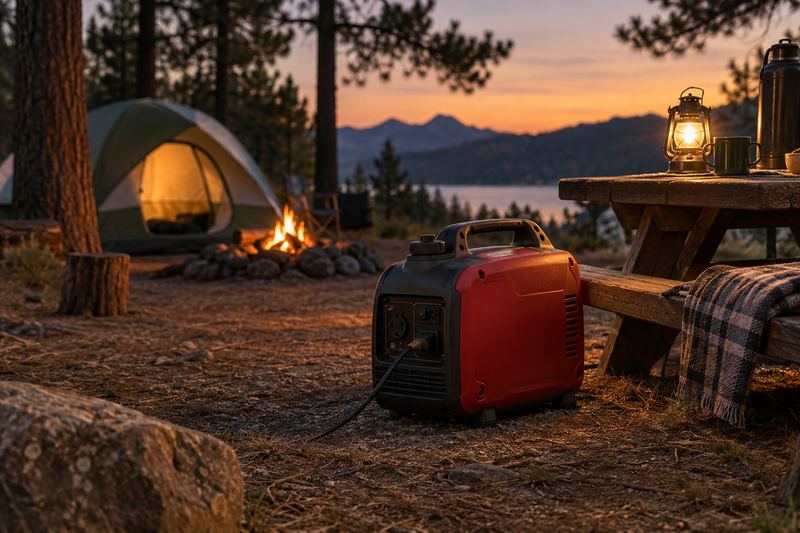
Many RVers choose inverter generators because they are quieter and lighter, and two compatible units can be linked with a parallel kit when you need more power, such as for a rooftop AC. Campgrounds and parks set their own noise rules and generator hours, so check before you go. Conventional open-frame generators give more watts for the money and are common for 50-amp rigs. Our inverter vs conventional generator guide compares the two.
How do I run an RV generator safely?
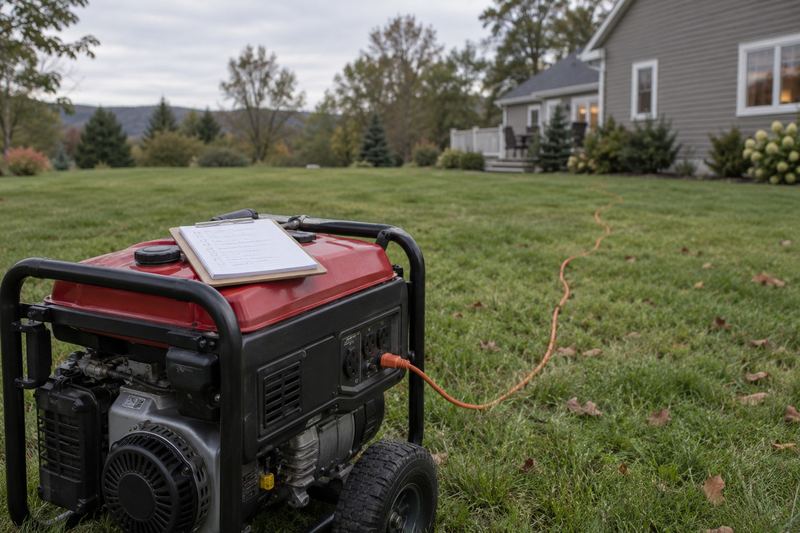
- Keep the generator outside the RV, away from doors, windows, vents and slide-outs, with the exhaust pointed away from your rig and your neighbors'. The CPSC advises at least 20 feet from doors, windows and vents for portable generators.
- Test the RV's carbon monoxide alarm before every trip.
- Plug the RV cord into the generator's RV outlet or through a properly rated adapter; shut off the AC and big loads before connecting, then turn them on one at a time.
More tips are in our generator safety guide.
Questions people ask
Will a 2,000-watt generator run a 30-amp RV?
It will run lights, the converter, a fridge, a TV and small appliances, but usually not a rooftop AC unless the AC has a soft starter, and not the AC together with a microwave.
How many watts is a 30-amp RV?
30 amps × 120 volts = 3,600 watts maximum. Loads above that trip the RV's main breaker.
How many watts is a 50-amp RV?
A 50-amp RV has two 120 V legs of 50 A each, about 12,000 watts in total.
What size generator runs two RV air conditioners?
Plan on the running watts of both units plus the starting surge of one, plus your other loads. Cummins lists about 5,500–8,000 W for an RV with two air conditioners; soft starters can reduce it.
Can I plug my RV into my house?
Yes, into a normal 15 or 20 A outlet with the right adapter, but you will have only 1,800–2,400 W, which is not enough for the rooftop AC alongside other loads. Never use an RV connection to power your house.
Sources
- Cummins: What size generator do I need to power an RV?
- Micro-Air: What size generator do you need to run an RV air conditioner
- Dometic: Brisk II 13.5K BTU rooftop air conditioner specifications
- Dometic: Brisk II 15K heat pump specifications
- Champion Power Equipment: 6 questions to ask when choosing an RV generator
- Generac: Portable generator brochure with wattage reference chart (PDF)
- U.S. Consumer Product Safety Commission: Portable generator safety alert (PDF)